
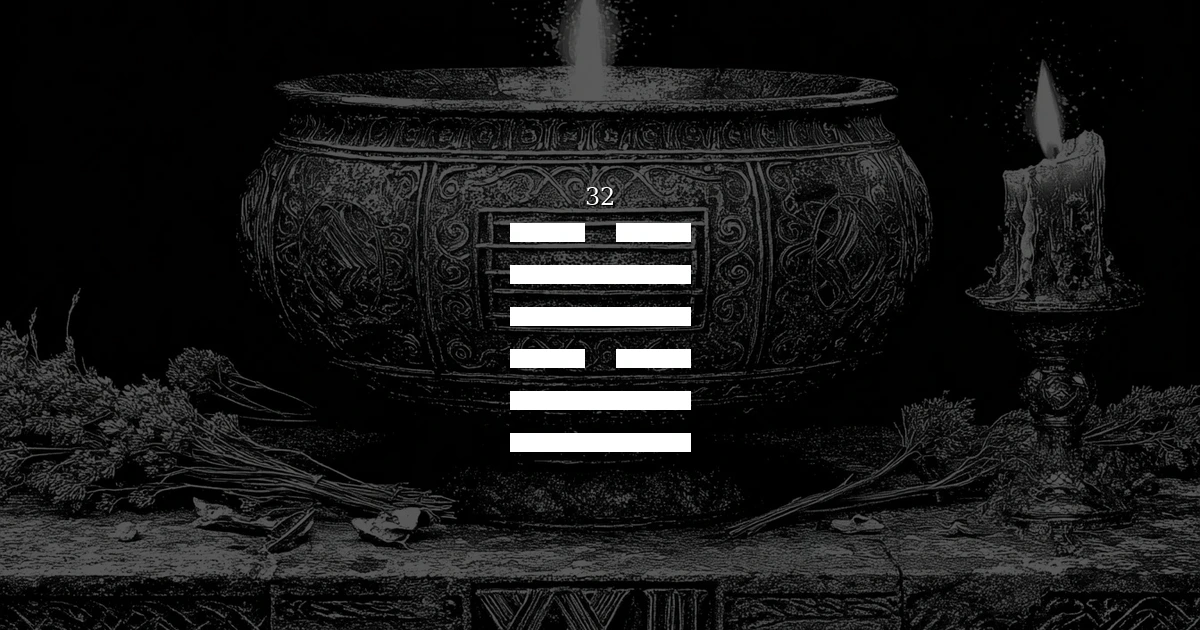
The quick answer: choose I-Ching: App of Changes if casting-method transparency and a full line library matter most; choose I Ching: Book of Changes by Brian Browne Walker for an accessible, named modern translation; choose I Ching by digitalillusion for a configurable Android tool with manual coin input and offline dictionaries.
We rechecked official product pages and app-store listings on August 12, 2026. Several products previously named on this page could not be verified under the stated developer names, so they have been removed rather than ranked from second-hand descriptions.
What Makes a Good I Ching App
Before the rankings, a brief note on criteria — because they’re not what you might expect.
Translation matters more than interface. The I Ching’s meaning lives in the text. A beautiful app with a thin or poorly translated interpretive layer is less useful than an ugly app with Richard Wilhelm’s full commentary. The hexagram texts are dense, layered, and don’t always resolve into simple actionable sentences — and any app that pretends otherwise is either summarizing too aggressively or misrepresenting the source.
Casting method is a real question. Traditional I Ching consultation uses yarrow stalks (a slow, meditative process) or three coins (faster, more common). Digital apps use pseudorandom or truly random number generation. This is worth knowing not because digital casting is “wrong” — the I Ching’s usefulness doesn’t depend on a particular random mechanism — but because the method shapes the experience. Some apps let you choose; some don’t tell you what they’re using.
Daily use requires the right friction level. The I Ching is not a quick-answer oracle. A reading that produces meaningful reflection usually takes ten to fifteen minutes of engagement with the text. Apps designed for speed-reading a hexagram and moving on are working against the grain of the practice. The best daily I Ching apps create space for the text rather than rushing past it.
The Rankings
1. I-Ching: App of Changes — Best for Casting Transparency
The developer documents a simulated yarrow-stalk process rather than describing the result only as “random.” You can also use physical coins, shake virtual coins, save readings in a journal, and browse every hexagram and line in its library. The official page lists support for Apple, Android, and Kindle devices.
Best for: Readers who care about how line probabilities are generated and want a searchable study library.
Limitation: Its interpretive text is the developer’s original rendering, not Wilhelm/Baynes or another standard translation. Read the sample text before choosing it as your primary reference.
2. I Ching: Book of Changes by Brian Browne Walker — Best Accessible Translation
This app clearly identifies its textual basis: Brian Browne Walker’s contemporary rendering of the I Ching. It supports casting in the app or entering your own coin tosses and includes a journal for questions, results, and notes. Verified listings exist on both the Apple App Store and Google Play.
Best for: Beginners who want a readable, consistent interpretation with a named author.
Limitation: It is one modern interpretive translation, not a comparison library. Readers doing textual study will still want Wilhelm/Baynes, Legge, Rutt, or another full edition alongside it.
3. I Ching by digitalillusion — Best Configurable Android Option
The Google Play listing describes manual or generated three-coin casting, primary and transformed hexagrams, full changing-line text, saved histories, custom dictionaries, and offline access after definitions are downloaded. It also exposes options for how multiple changing lines are evaluated.
Best for: Android users who want control over casting input and interpretation settings.
Limitation: It is Android-only, and its flexible dictionary system means textual quality depends partly on which dictionary you choose.
4. I Ching: Book of Changes by CodeSerk — Best Free Journal
The current Apple and Google listings describe a free, ad-free app with three coin-input modes, a reading journal with notes and tags, and a 64-hexagram glossary. It is a practical low-cost starting point when recording questions matters more than comparing scholarly translations.
Best for: New readers who want manual coin entry and a simple journal without an upfront purchase.
Limitation: The store description does not identify a standard published translation. Treat its interpretation as an app-specific rendering rather than an authoritative source text.
5. The Whisper — Best for I Ching in Multi-System Context
This entry requires transparency: The Whisper is the app behind this blog. But it belongs in this list for a specific reason worth explaining honestly.
The Whisper doesn’t position itself as a dedicated I Ching app — it’s a synthesis engine that draws on the I Ching alongside 14 other divination systems to generate a single daily message personalized to your birth data. The I Ching’s hexagram for the day is one of the inputs; how it relates to your BaZi day master, your Nine Star Ki monthly energy, and your Vedic nakshatra period is what the synthesis produces.
For users who want the I Ching in isolation — the full hexagram text, a dedicated casting ceremony, a personal journal — The Whisper is not the right tool, and it doesn’t try to be. For users who want the I Ching’s perspective woven into a broader daily reading that crosses Eastern and Western traditions, it’s a different kind of value. The difference between a parallel-display approach (here’s your hexagram, here’s your tarot card, here’s your BaZi day) and a genuinely synthesized one is discussed in more depth in our piece on what to use when one astrology system isn’t enough.
Best for: Users who want the I Ching as one voice in a multi-system daily practice rather than as a standalone oracle.
Limitation: Not a dedicated I Ching tool. No yarrow stalk or coin-casting ceremony. The hexagram is generated, not cast.
Head-to-Head Comparison
| App | Disclosed text / method | Changing lines | Journal | Price signal | Platform |
|---|---|---|---|---|---|
| I-Ching: App of Changes | Original text; documented yarrow algorithm | Yes | Yes | Store-dependent | Apple / Android / Kindle |
| Brian Browne Walker | Named modern translation; coins or app cast | Yes | Yes | Paid on U.S. App Store when reviewed | Apple / Android |
| digitalillusion I Ching | Custom dictionaries; manual or generated coins | Yes, configurable | Yes | Free listing | Android |
| CodeSerk Book of Changes | App-specific text; manual or virtual coins | Yes | Yes, with tags | Free, no ads claimed | Apple / Android |
| The Whisper | Multi-system synthesis; generated daily hexagram | Not a dedicated changing-line tool | Daily history | Freemium | Web app |
The Translation Question, Briefly
The three most commonly used I Ching translations in English are Richard Wilhelm’s (rendered into English by Cary F. Baynes), John Blofeld’s, and the more recent translations by Richard Rutt and Rudolf Ritsema. Wilhelm’s is the most widely cited in Western divination contexts and the one Carl Jung worked with directly — which is part of why it remains the reference point for most apps.
Apps that don’t specify their translation source are often using condensed paraphrases rather than a complete scholarly translation. This is worth checking. The difference between a full Wilhelm text and a summarized modern retelling can be the difference between a reading that opens up over time and one that feels like a fortune cookie.
For a deeper look at how the major translations compare and what each emphasizes differently, see our comparison of Wilhelm, Legge, and Blofeld’s I Ching translations.
What Most I Ching Apps Get Wrong
Treating changing lines as decoration. In the I Ching, a hexagram with changing lines produces a second hexagram — the transformed state. The relationship between the two hexagrams is central to the reading’s meaning, not an optional add-on. Apps that display the changing lines without clearly showing the resulting hexagram and its text are giving you half the consultation.
Speed-optimizing a slow oracle. The I Ching rewards dwelling. A reading that took two minutes to cast and thirty seconds to read has probably not been read. The best I Ching apps create an experience that makes you want to slow down, not speed up.
Ignoring the question. Classical I Ching practice involves holding a specific question while casting. Some apps don’t prompt you to formulate a question at all, which makes the reading harder to apply. A field for recording your question before casting — and seeing it alongside the response — is a small feature with a meaningful effect on how useful the reading is.
How to Use an I Ching App Well
Regardless of which app you choose, a few practices improve the quality of daily I Ching use:
The question matters more than the hexagram. An unclear question produces a hexagram that could mean anything. Take thirty seconds to formulate something specific before casting.
Read all the text. Not just the hexagram name and its one-line summary. The judgment, the image, and the line texts each add something. The first read rarely gives the complete picture.
Note the changing lines and follow them to the transformed hexagram. This is where many readings find their resolution — the tension in the primary hexagram, resolved or complicated by what it’s moving toward.
Return to the reading later in the day. The I Ching often makes more sense in retrospect than in the moment of casting. Seeing how the hexagram’s framing applied to what actually happened is how the practice develops over time.
Bottom Line
For transparent casting mechanics, I-Ching: App of Changes is the clearest choice in this set. For a readable named interpretation, Brian Browne Walker’s app is easier to evaluate than products that do not identify their text. Android users who want manual controls should compare digitalillusion’s tool with CodeSerk’s simpler cross-platform journal.
The right I Ching app is the one whose text, casting assumptions, and data practices you understand well enough to trust for your intended use. A polished interface is not a substitute for those disclosures.
Verification sources
Product names, platforms, and feature claims were checked on August 12, 2026 against:
- I-Ching: App of Changes — official product and casting-method documentation
- Brian Browne Walker’s I Ching: Book of Changes — U.S. App Store
- Brian Browne Walker Books — Google Play listing
- digitalillusion I Ching — Google Play listing
- CodeSerk I Ching: Book of Changes — Google Play listing
Store availability, prices, and privacy disclosures can change. Confirm the current listing in your region before installing.